A pest control company had a 1.0 rating and a broken phone number. Here is what we changed.
This case is told from the founder’s memory; figures are as he recalls them, not from a report. Details changed.
Who this case is for
A disinfection and rodent control service for households and businesses.
- Before: The profile had a non-working phone number and a rating recalled as 1.0.
- What we did: We fixed the contact, replied to reviews and developed articles from the specialist’s accounts.
- Mistake examined: Outside writers misunderstood the work, while photos of dead rodents repelled people.
All cases · Plumbing company · Independent plumber
A European disinfection and rodent control company was difficult to reach through its own Google Maps profile. A previous marketer had left a non-working phone number. People tried to call, received no answer and left low ratings.
The founder remembers the starting rating as 1.0.
There was another problem in search: broad queries about rodents often led people to DIY shops selling traps and treatments. The company needed enquiries from people who wanted a professional visit.
We repaired the contact route, clarified the service pages and began turning the owner’s recorded field stories into articles. Before finding that approach, we made two mistakes of our own: relying on outside writers without enough expert input and using photographs that repelled the people we wanted to help.
What brought the client to us
The company served households and business customers. It wanted suitable calls for its services.
Its online presence was making that harder. An abandoned profile and a very low rating gave prospective customers reasons to hesitate. A broken phone number prevented those who did try from reaching the company.
The contact error had originated with a previous marketer. Customers, understandably, experienced it as a failure by the business itself. They were trying to arrange help, not investigate who had edited the listing.
Meanwhile, the company’s subject overlapped with a much wider market for pest control products. Someone searching for a trap and someone wanting a professional visit could begin with similar words.
The company needed to make its actual service clearer.
What the review revealed
The first priority was the route from finding the business to speaking with it.
Sending more people towards a non-working number would repeat the same failure. Before expanding promotion, we needed to restore that contact.
The negative feedback also had a practical cause we could address. We could correct the number and respond to the customers who had described their experience.
In search, the issue was the visitor’s task. A broad interest in rodents did not necessarily mean that the person wanted to hire a service. Shops and DIY products appeared alongside material about professional treatment.
The website needed to make a visit from a specialist easy to distinguish from buying a product.
We also needed better source material for articles. A writer could assemble general information about pests, but that was not the same as understanding the company’s work on actual visits.
What we did
Restored access and corrected the number
We recovered access to the Google Maps profile and replaced the non-working contact number.
This was a basic repair with direct consequences for the customer. Someone who found the company could now reach it.
The owner kept control of the incoming calls. With the phone at hand, he could hear what prospective customers needed and judge whether enquiries matched the service.
Responded to negative feedback
We replied to earlier negative reviews and organised requests for genuine feedback from new customers.
The aim was to fix the problem and let more recent experiences become visible. We did not treat an old complaint as false simply because it was inconvenient.
Nor did we promise to remove negative reviews. A repaired service and fresh, honest feedback were the work described in this project.
Separated service enquiries from product searches
We distinguished pages about calling the service from material about buying treatments for independent use. We also separated different service problems, including rodents and insects.
Someone wanting a professional visit could more readily understand what the company offered.
The point was to explain the service accurately, rather than attract every possible visitor interested in pests. A person looking to buy a product from a shop might have no need for this company.
Used the owner’s voice recordings as source material
The owner recorded stories about field work: situations encountered on visits, customer questions and explanations he gave in practice.
We transcribed those recordings and developed them into articles for local publications.
He did not have to become a copywriter. He could explain a familiar situation in his own words, and an editor could organise that material into a readable account.
The expert supplied the experience. Editing supplied structure and clarity.
Making this information available for search and AI-assisted discovery was part of the purpose. We do not have a separate remembered count of enquiries from AI answers, so we do not add one.
Changed the photographs
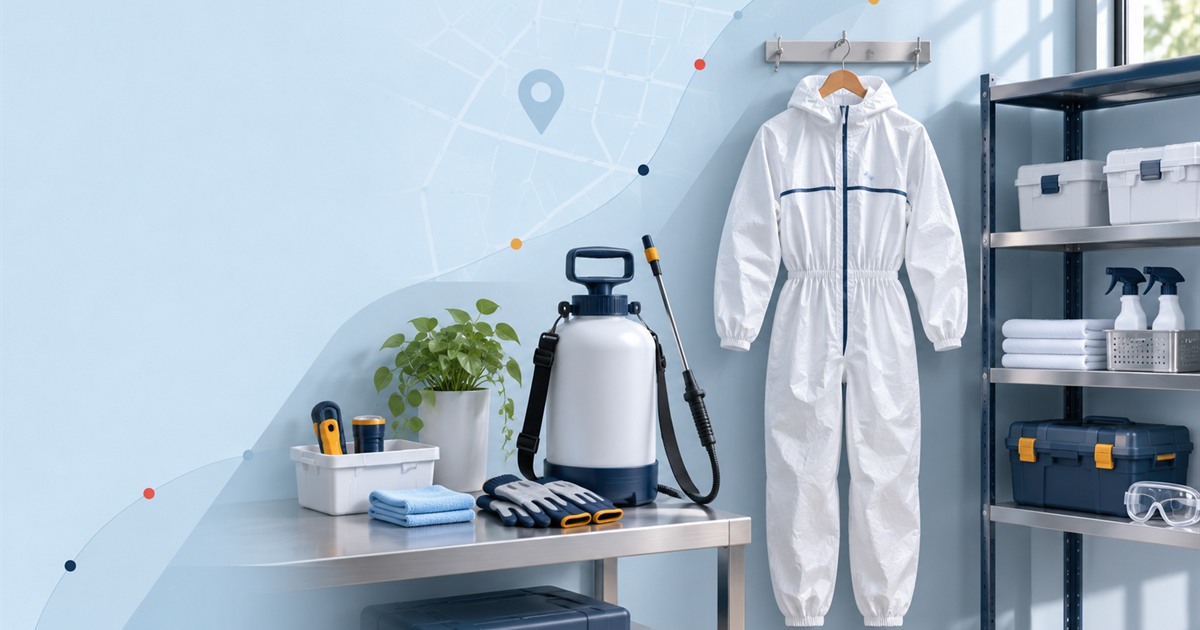
After the problems with pictures of dead rodents, we shifted to showing the work process.
Protective equipment, cleanliness and staff at work could help explain the service without making unpleasant outcomes the centre of the visual presentation.
What happened
The founder recalls the profile moving out of its very poor initial state and into what he describes as the “green zone”. The account does not contain an exact final rating.
The company began receiving a steady stream of relevant calls from both business and household customers. The owner monitored those conversations directly.
Several changes worked together: a functioning number, responses to old feedback, genuine new reviews, clearer pages and articles grounded in the specialist’s experience.
We cannot isolate one of those elements as the sole cause. The practical change was that people could find a working business, understand the service and reach the person responsible.
Our mistakes and what we changed
We commissioned writing without supplying enough expertise
We initially gave the articles to outside writers. The material came back detached from the owner’s actual work.
It contained generic explanations and inaccuracies that the specialist could not accept as an account of his service. The founder remembers the result as nonsense.
That was our responsibility. We had chosen a writing process that asked someone unfamiliar with the work to reproduce professional experience they had not been given.
We changed the starting point to transcripts of the owner’s speech.
An editor still had a job to do: understand the account, remove repetition, organise the explanation and avoid adding unsupported details. But the expertise no longer had to be guessed from a writing brief.
The recording method was valuable because it made real source material available.
We photographed results that people did not want to see
Pictures of dead rodents seemed to us like direct evidence that the work had been done.
Some people found them repellent. The images also ran into moderation restrictions.
We had chosen the visual material from the service provider’s perspective without giving enough thought to the person searching for help.
We changed to photographs of the process, equipment, cleanliness and staff. Those images could communicate the work without relying on disturbing details.
This is an account of the reaction and moderation problems encountered with our materials. It is not a claim that every platform prohibits every image of a pest.
What another business owner can take from this
- Call the number on your own profile. A simple contact check can reveal a problem that more promotion would only magnify.
- Investigate the cause of complaints. If customers describe a real service failure, fixing it should be part of the response.
- Distinguish a service from a related product. Similar search terms can conceal very different customer needs.
- Give an editor access to your experience. A recorded explanation can be a useful starting point for accurate writing.
- Assess photographs from the customer’s perspective. They should help someone understand the service and feel able to contact you.
Questions and answers
Can a profile with a very low rating recover?
In this project, correcting the contact, responding to reviews and receiving fresh genuine feedback improved the profile’s overall position. That does not establish a timetable or final rating for another company.
Were the negative reviews deleted?
Deletion is not part of the claimed result. We responded to complaints, corrected the phone number and worked with new customer feedback.
Why not publish more general articles about rodents?
The company needed calls for a professional service. General interest in rodents also includes people seeking DIY products. The pages needed to explain which need the company served.
Does using voice recordings conflict with keeping agency instructions in writing?
No. A recording can supply material for an article. The scope, terms and approval of the work can still be recorded in writing.
What replaced the disturbing photographs?
Images of the work process, protective equipment, cleanliness and employees doing their jobs.