A family restaurant found a story in its food. We learned to pay our own bill.
This case is based on the founder’s recollections; figures and details may differ.
Who this case is for
A small family restaurant serving traditional food.
- Before: Good food and attentive service were not enough to fill the dining room.
- What we did: We told the stories behind dishes and added codes, real photos and an easier route to feedback.
- Mistake examined: Friendship and complimentary meals blurred professional boundaries.
All cases · Grocery store and prepared food · Coffee shop
What brought the client to us
We discovered this restaurant while out with the family. Our child wanted something to eat, so we happened to walk into a small, two-storey place.
A waitress approached first, then the owner. He offered drinks on the house, including wine. We do not drink, so he suggested homemade fruit drinks instead.
The food was a pleasant surprise: generous portions, fresh ingredients and good cooking. He apologised for the wait. We understood that the dishes were being prepared and were happy to wait.
He told us about himself and offered to put whatever we liked on YouTube on a large television. Guests could connect a phone to it. He clearly wanted people to enjoy being there.
It was lunchtime, yet the room was almost empty.
I asked how a restaurant with that food, service and interior had so few guests. That question became the start of the project.
What the review revealed
The owner had already hired people to help with promotion. There was a website, Instagram and a Facebook group.
The accounts had been maintained for a while, but after roughly two months without a noticeable return, that work had stopped.
We opened the pages on the restaurant’s television. The posts said the familiar things: come here, the food is delicious, the place is attractive and the prices are reasonable.
What made this particular restaurant worth choosing? Change the name and those posts could describe almost anywhere.
The owner was barely managing Google Maps. Reviews from a previous establishment at the same address remained, while there was little fresh feedback about his own restaurant. He had not been asking guests. A few good recent reviews were helping an otherwise poor picture.
The website also used glossy, heavily treated food photographs. They did not give the feeling that this was the plate someone would bring to this table.
What we did
Started with a particular dish
We wanted a more specific invitation than a general promise of traditional cuisine.
The owner said he made sinori particularly well. We used that as a starting point: a dish someone could come specifically to try.
It gave the restaurant something definite to talk about.
Published the stories behind the food
The posts began explaining dishes rather than simply asking people to visit.
For example, a post about khashlama could show the dish and discuss its history, ingredients, preparation and how to enjoy it. The invitation to the restaurant came after that useful account.
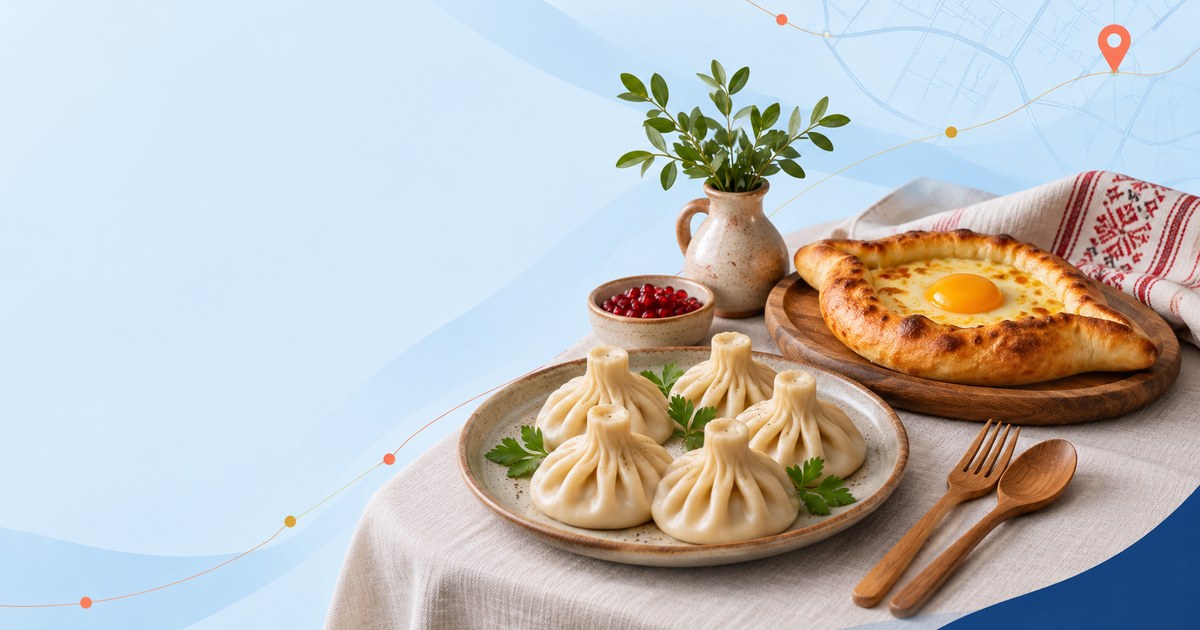
We also talked about kharcho, khachapuri, sinori and kubdari.
More than fifty posts about different dishes appeared over two to three months. We used the social accounts and the Google Maps profile to share the material.
Added a way to identify visits from posts
A code word at the end of a post came with a 10% discount. In my account, I used an example along the lines of “kharcho today”.
This helped us recognise guests arriving after reading the material.
We could connect a publication with a restaurant visit instead of relying only on reactions underneath a post.
Made genuine feedback easier to leave
We asked guests to describe their real experience and put QR codes on tables so they could find the review page easily.
We also proposed a small staff bonus for reminding guests about feedback. That describes the internal arrangement in this historical project; the experiences came from actual diners.
New reviews began to appear, giving the profile more recent accounts of this restaurant.
Showed food in its actual setting
I asked for photographs of the dishes on the restaurant’s tables, with the interior visible.
The aim was to show a meal someone could order there, in the place where they would eat it.
Website work continued and took time. The useful food stories and photographs did not need to wait for every part of that work to finish.
Gave the owner a continuation checklist
The owner was an active participant. We wrote a checklist of what he needed to keep doing.
He gradually became the marketer for his own restaurant. Later, I saw him on Facebook advising others about developing a restaurant business.
What happened
Fresh reviews appeared and interest in the restaurant returned.
We observed it being recommended in search and system answers to questions about where to try particular dishes.
The accumulated material mattered to our experience of the project: more than fifty posts over two to three months gave people different ways to encounter the restaurant and its food.
The owner was very pleased with the work. We remained in contact, and he had a process he could continue himself.
I am not adding a percentage increase or an occupancy figure to this account. What I remember is the renewed interest, new feedback and an owner who took an active role in promotion.
Our mistakes and what we changed
Friendship blurred the working relationship
We became friends. The owner began refusing payment for meals, insisting that he wanted to treat us.
I found it uncomfortable. We eventually stopped visiting because paying the ordinary bill had become difficult.
That experience gave me a straightforward rule: when I visit a client’s establishment, I pay for myself and any employee with me.
It applies even when the offer is just coffee or pizza. I do not want generosity to become a sense of obligation within a working relationship.
We needed a firmer answer about wine promotion
The owner wanted to promote his wine and kept returning to the subject.
It was outside the work we wanted to do, but conversations could drift towards trying it anyway. I had objections and did not immediately make the boundary clear enough.
I learned to give a definite answer. We do not promote alcohol or tobacco.
For this restaurant, there was plenty to work with in the cooking, the dishes and the guests’ experiences.
What another business owner can take from this
- Give people a specific reason to visit, such as a dish with a worthwhile story.
- Photograph food in the place where customers will actually eat it.
- Use a clear way to connect a publication with a visit.
- Make it easy for guests to share honest feedback.
- Preserve professional boundaries when a business relationship becomes friendly.
Questions and answers
Why start with sinori?
The owner said he cooked it particularly well. It provided a specific introduction to the restaurant before we developed stories about other dishes.
What was the 10% discount for?
It accompanied a code word in the publication and helped identify visits from that material. It was not payment to a customer for a review.
What kind of photographs did you want?
Actual dishes on the restaurant’s tables, with its interior in view, so readers could recognise what they could order there.
What did the owner keep using afterwards?
A checklist of continuing tasks and his experience of publishing. He began managing his own promotion.