A grocery store had taught its customers to wait for a 30% evening discount
This case is based on the founder’s recollections; figures and details may differ.
Who this case is for
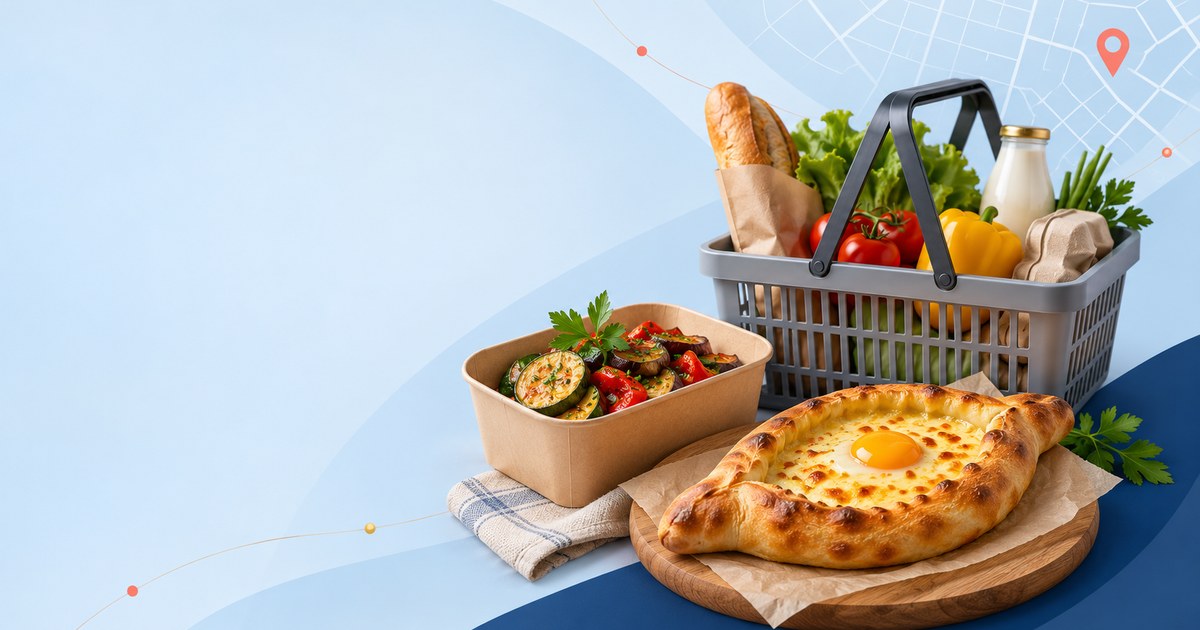
A grocery store with its own prepared food and frozen products.
- Before: A 30% discount had taught customers to wait until the evening.
- What we did: We changed the promotions and used the Google Maps profile to tell customers about them.
- Mistake examined: We spent a week on alcohol and cigarette materials despite expecting advertising problems.
All cases · Family restaurant · Coffee shop
What brought the client to us
The store had a lot going for it: a spacious, clean interior, fresh meat and poultry, and its own prepared food.
There were salads, pastries, khachapuri, grilled chicken, khinkali and dumplings. Customers could see staff working in a clean preparation area.
The difficulty was habit. This was a new shop, while residents already had places they visited near home.
The marketers hired by the owner had introduced a 30% discount after nine in the evening. Customers responded, but the offer was teaching them a habit the business did not need.
What the review revealed
The discount covered prepared food, confectionery and frozen products.
A customer could wait until the evening and buy the same frozen dumplings for considerably less. There was little reason to buy them earlier.
I could understand reducing the price of something perishable late in the day. Applying the same approach to frozen stock gave customers a reason to delay a purchase that could otherwise happen during normal hours.
The store’s products and comfort were not the main reason those shoppers returned. The broad discount was.
We needed to reconsider the offer before simply bringing more attention to it.
What we did
Changed the promotions
We developed an approach based on selected products rather than reducing everything.
My example was straightforward: if good khinkali elsewhere cost about 1.5 lari, the shop could offer its own at 1.2. Those were illustrative prices used to explain the idea, not a full record of the store’s pricing.
We also discussed developing customer loyalty and cards. The shop needed reasons for people to return beyond waiting for a blanket evening reduction.
Put useful news on the Maps profile
We asked the store to maintain its Google Maps profile and publish news and promotions, including the following day’s offers.
Sales staff explained where customers could find them.
This gave people a practical reason to open the profile. They wanted to know what would be available at a useful price.
We were not asking them to make meaningless visits. The information itself was the reason to return.
In our observations, people began monitoring the offers and spending time looking at the store’s profile.
Used the website to support recognition
The store had been pursuing an online shop. We proposed a different immediate role for its website: help people who had heard the name understand the business they were looking up.
The social accounts, website and Maps profile would support recognition of the same store.
For this project, that was more useful than starting with a complicated online retail build.
What happened
I remember increased store visits and sales on a relatively small budget.
We also saw more people searching for the store by name, opening its profile and studying the information. The next day’s offers gave them a reason to do that again.
The work used something the business already had: good products and the ability to make specific offers.
I associate the improvement with the changes we made in this store. That does not establish that a certain number of profile visits will produce a guaranteed position in search.
The practical result was more interest in the shop and more visits, with promotion organised around the store itself.
Our mistakes and what we changed
We spent a week preparing material we should have declined
The owner kept suggesting advertising alcohol and cigarettes.
We went along with it and spent about a week producing materials, even though we already expected difficulties using that advertising.
We hoped it might somehow work. That was a poor basis for spending the team’s time.
After this project, our boundary became clear: we do not work on advertising alcohol, tobacco, hookahs or related categories.
We do not begin preparing material while hoping to find a way to use it later.
The lesson for me concerned the conversation with the owner as much as the advertising. If an assignment does not fit the work we are prepared to do, we need to say so before a week has been spent on it.
What another business owner can take from this
- Consider which buying habit a discount creates. It may encourage customers to postpone purchases.
- Make an offer easy to understand through a specific product and a clear reason to visit.
- Put useful updates somewhere customers can readily return to them.
- Agree the boundaries of an agency’s work before materials are produced.
Questions and answers
Why was the evening discount a problem?
It covered frozen products as well as perishable food. Customers could save 30% simply by buying the same product later.
Why did people open the Maps profile?
Staff told them it contained news and promotions, including offers for the next day. Customers had a practical reason to look.
Did you build an online shop?
Our proposed priority was a website that introduced the store to people searching for its name, alongside social accounts and Maps.
What was the agency’s mistake?
We spent about a week on alcohol and cigarette materials despite having doubts from the beginning. We made declining that work a firm rule afterwards.